What is Theatre?
Theatre to me is an artistic way of expression which is viewed by an audience. This means the performance can be revealed in any way with any purpose as long as someone else can interpret it from their own mind and vision. It's sharing art and allowing another person to join in or consume your performance.
What have you learnt over the last two terms? What skills have you already developed?
Over the last two terms I have learnt the importance of delivering lines and engaging into a characters persona fully. Our naturalistic term showed me how to dive into the detail and construct a character from scratch, to the point where you think about what they would do in a "given circumstance". Also the power of naturalism and acting between transitions - acting whilst your'e not speaking is as important as being the protagonist. The political term encouraged me to not throw away any lines as each line builds on the greater image of the overall message. Similarly, the importance of the message your'e trying to convey within the performance is key. This term helped me understand the fact that as an actor you want to provoke thought from the audience and make them question the society they live in, by adding a political theme to the performance.
What do you think experimental theatre looks like?
I think experimental theatre looks like a collision of multi media's. It allows instillation, art, dance, physical movement, singing etc. The word "experimental" makes me think that the performance has endless possibilities which can interpret an actors mind to become whatever it wants to be. An actor can come up with an idea and straight away adapt it to be as abstract or naturalistic as they want. Experimental theatre looks like a blank canvas which waits for it's artist to manipulate it due to whatever emotion or feeling they have.
What are your expectations of experimental term?
I think during the experimental term it will show an open door between the director and an actor in which whatever idea seems suitable to the performance will be taken on. Imagination is vital during this term as it will cause actors to do things just for the sake of experimenting. Also, I think this term holds mystery because you don't have a strict policy to follow - your'e following your imagination which is limitless.
Cost of an actor.
Walking on the grid, then added music.
This exercise made me think about my limits and determination. As we were instructed to add a goal at the end of the gird it made me more determined to reach the end of the grid because I was passionate about my goal. However, being restricted to the grid meant I had to follow a certain pattern and avoid bumping into other actors which made the task harder. I believe, it showed that to reach our goals there will be things in the way that we will have to overcome and also do we really know our limits because, I could've pushed harder to reach my goal but a natural human tenancy is to hold back against your limit. Including music to this practical added to the tension and emphasized how physically you can show courage, drive and commitment just through movement. Music impacted on the stress of reaching my goal and made me think once the music was off have I truly reached my goal.
Knee fight in pairs
During the knee fight exercise I was pushing myself to keep fighting and strive to remain consistent energy. It made me analyse my opponent and their weakness because my goal transformed into hitting the back of their knee. Also, when my partner was attacking me with more energy straight away, it made me wake up and want to deliver more. The task made me think about the power and fight that an actor must maintain during their performance. This power must remain evident because you do not want the audience to see you disengaged or tired.
Fishing lines
The fishing line task made me think about persistence and seeking help because, being the fish I didn't want my partner to take me away from my habitat into their world. Grazing and scarping against the floor meanwhile the fisher pulls the line with all their strength highlights the pain behind a famous hobby. This made me think about an actors intentions. A simple exercise such as finishing, can be seen in any light due to your intention. If an actors intention is to be villainous then your body language and facial expression would show. In addition, including the music of a sea side brought this task to accompany its purpose. The music made me oblivious to the intention of the actors as it covered the devious or kind hearted mindsets.
Lover trying to leave
Immediately, involving music in this piece made it embody the qualities of physical theatre. The music encouraged the purpose and message of the task. Being the actor not wanting the lover to leave made me want to sink into my partners body. This means in order for them to stay I wanted to show I am apart of them by taking on their physical shape. Significantly, this task made me understand that you can show the meaning of wanting something so much through silence and movement. Which highlights on Artauds technique as he believed the physical representation is much more important than the lines.
Alphabet boxes solo, group
Primarily, this exercise was about body language and self reassurance because, it was up to the actor where they placed the letters within their own box and how they touched the letters. Reaching each letter with any part of the actors body made me resemble a broken doll and how you can't tell what they're trying to communicate as the audience isn't aware of where the letters have been placed. Music brought this task to life and created meaning within the touch of each letter. It meant the actors could follow the beat and start to crafts words that mean something to them which emphasize how you can show passion and journey through movement. I think, adding text would've made the audience understand the task more but, from when it is experimental theatre conveying different interpretations opens the audiences imagination.
Dancing in the dark
This task meant we had to disconnect from our mind and just move to the music in whatever way our bodies found suitable. During this I felt drained but powered up because, we had been doing it for such a long time and the room was starting to get hot from when everyone was showing dedication to this task. Doing it in darkness meant you was free to move however you want and truly express movement through the music. It isolated everyone from each other and made you feel like you had an independent purpose. I notice my body taking on the instrumentals and moving freely, non of my actions where planned and I literally felt as if the music was controlling me. As the track would slow down my movement began to intimately become slow and delicate but, when the music got fast my body just sprung into action. I started to lose sight of being tired because from when I wasn't thinking about my movement, I was thinking about myself and how I felt. The purpose of this exercise is to show the determination of an actor through movement and if actors can disconnect from their minds. Allowing the music to take control and make your body create interesting and flowing shapes without having to plan the process. It is our bodies that are the important tools to a successful performance. This emphasizes on Artauds "Visual Poetry" technique because he believed the body has the power and capability to provoke an emotional impact with the assistance of sound/music.
Friday, 20 February 2015

Thursday, 19 February 2015
Evaluation


Group Piece
Our group piece in the Cabinet of Curiosities was the study of Nature vs Nurture. Expanding on this, we wanted to create a theatrical environment where the audience could witness this statement and infer whether it is a natural cause or if humans act a certain way because of their nurture and environment around them. The study of children coming into the world was explore within our piece and the journey they take in the world - growing up. Through vocal and physical representations we embodied the statement in both view points to question the audience view of the power of Nature vs Nurture.
Evaluation
Overall, I think our piece demonstrated the effect and power of Nature vs Nurture effectively. The torches made the space more intimate only allowing a certain amount of the body to be seen, hiding the rest from the audience would build on their senses and draw them into the section which is lit up. Also, the different effects of the torches (off, flash and on) made the energy of the performance more active and clear into what the purpose of the movement became. The transition and movement around the space was clean and useful, as it meant the audience could travel different lengths to watch the performance and us actors made use of the qualities of the space. I especially, loved the "Holding on" section as it conveys the intimate transition of love over lust. That section dramatically builds on the statement of nature vs nurture as is it the children's fault for holding on to the mother for too long or the mothers for over mothering their children. The power of the physical movement was harsh and vivid as it demonstrates how quick love can turn into pain. The use of torches proved to be effective as when us actors moved the lights would rapidly flash around the space - creating an almost elliptic, crashing atmosphere to coincide with the emotions. An improvement for the performance would be to act in-between transitions and when the attention isn't primevally on you. As the audience is all around the space and could be watching any actor at any time. Also, commit one hundred percent each time and no fixing your clothes. Fixing your clothes draws the audience away from the illusion and can look unprofessional during a performance.
Trio
Lose Yourself
Our trio is called lose yourself. It is based around how people are so lost in their struggles, pains and routine that they become numb to the emotion it evokes. Having the routine on a loop suggest the duration of time which shows how long people carry out the same job. We were inspired by Dorothea tanning - Eine Kleine Nachtmusik from TATE MODERN and how realistic her painting was, but carried out the aspects and qualities of a fantasy. The incorporation of realism and a dream was key as the difference couldn't appear to blatant. The repetitive gesture was influenced by Gestus and how you can incorporate meaning with gesture to provoke a reaction. So by conveying a ventriloquist dummy expression with classic business wear manipulated the audience perception of what was reality, how easily you can "lose yourself" within it.
Trio
I believe our piece was successful because the soft, delicate instrumentals of the "Ballerina music box" accompanied the pieces rhythmic movement. Also, how it continues on a loop emphasises how people are wired to their daily schedules. The simplicity of the piece was effective and intimate as their was no dialogue which meant the audience had to refer to the rationale and the physicality of the actors. The use of water and edible money drew the audience closer to the performance which meant they would concentrate and focus on the movement for a duration of time. The contrast in gestures created hight and a journey in our performance meaning the audience could follow the message behind the movement individually and as a group. Having one actor running around meant the audience would always be reminded of the piece whilst travelling the space and would want to return and find out what the actors end goal is. To improve our piece we could've added hints of dialogue to express how we felt doing it to fuel the meaning of the piece even more. Also, experiment with different gestures and levels so the audience can visually feel the depth and feeling of the performance.

Our trio is called lose yourself. It is based around how people are so lost in their struggles, pains and routine that they become numb to the emotion it evokes. Having the routine on a loop suggest the duration of time which shows how long people carry out the same job. We were inspired by Dorothea tanning - Eine Kleine Nachtmusik from TATE MODERN and how realistic her painting was, but carried out the aspects and qualities of a fantasy. The incorporation of realism and a dream was key as the difference couldn't appear to blatant. The repetitive gesture was influenced by Gestus and how you can incorporate meaning with gesture to provoke a reaction. So by conveying a ventriloquist dummy expression with classic business wear manipulated the audience perception of what was reality, how easily you can "lose yourself" within it.
Trio
I believe our piece was successful because the soft, delicate instrumentals of the "Ballerina music box" accompanied the pieces rhythmic movement. Also, how it continues on a loop emphasises how people are wired to their daily schedules. The simplicity of the piece was effective and intimate as their was no dialogue which meant the audience had to refer to the rationale and the physicality of the actors. The use of water and edible money drew the audience closer to the performance which meant they would concentrate and focus on the movement for a duration of time. The contrast in gestures created hight and a journey in our performance meaning the audience could follow the message behind the movement individually and as a group. Having one actor running around meant the audience would always be reminded of the piece whilst travelling the space and would want to return and find out what the actors end goal is. To improve our piece we could've added hints of dialogue to express how we felt doing it to fuel the meaning of the piece even more. Also, experiment with different gestures and levels so the audience can visually feel the depth and feeling of the performance.
Sunday, 1 February 2015
Workshop 4

The potential within Esme and Tia's performance is limitless. The way they used music and light to shape their performance and create a captivating physical representation is amazing. Each delicate move lead to another and the use of light created two shadows, which crafted a greater whole image and effect. As the two merged into one another the shadows collided and shaped different interpretation and meaning depending on the audience member. This means the story has changed and developed a rhythmic fluidity which the girls can add to and repeat. The piece is experimental because the girls saw inspiration from an art piece and used it as a stimulus to create their final product. The use of multi media's add to the experimental aspects as they build on the effect of the performance and that your imagination can create a theatrical performance. I think an audience member looking at this performance would be significantly drawn in and want to follow the story throughout the whole piece. Also, It was force them to commit their full attention to the piece as the slow movement from the actors are soft and intimate. You can see both actors have used Grotowski's work to inspire their piece through the delecacy of each transistion and movement of their body.
Franko B
https://www.youtube.com/watch?x-yt-cl=85114404&feature=player_embedded&v=ic6fOEkpiko&x-yt-ts=1422579428
Franko B - I miss you
For me watching this video I felt slightly uncomfortable and on edge as it's not a everyday ritual to watch a naked man walk up and down. However, beyond his movement I saw reason and life as I believe each step he took emphasized on the effect time can have when you miss someone. It was bright at the end of the runway and Franko B's body lit up which made me think of the quote "it get's brighter at the end of the tunnel". This could suggest hope and that the real treasure in missing someone is them knowing you can survive on your own. Intimate scratches which lead to blood trickling down his leg implied the delicate pain and emotion behind missing someone. Also, how the colour of his body made it obvious to the eye. This subtracted from the tension from Franko B's nudity as the audience now had a chance to witness the impact of self harm but couldn't do anything about it. Relating to Artaud's "Theatre of Cruelty " the audience are put in a atmosphere of danger and discomfort to challenge their raw emotions and bring the theatricality back to their home truths. The trails of blood resemble the infant feeling of missing someone and how it doesn't die - like blood it stains the floor leaving a path of memory. Each drop of blood is a part of Franko B which shows he wants to commit to his art and convey genuine emotion during his performances.
Franko B was born in Milan and has lived in London since 1979. He has been creating work across video, photography, performance, painting, instillations. His work was originally based on the bloody and ritualised violation of his own body.

Franko B - I miss you
For me watching this video I felt slightly uncomfortable and on edge as it's not a everyday ritual to watch a naked man walk up and down. However, beyond his movement I saw reason and life as I believe each step he took emphasized on the effect time can have when you miss someone. It was bright at the end of the runway and Franko B's body lit up which made me think of the quote "it get's brighter at the end of the tunnel". This could suggest hope and that the real treasure in missing someone is them knowing you can survive on your own. Intimate scratches which lead to blood trickling down his leg implied the delicate pain and emotion behind missing someone. Also, how the colour of his body made it obvious to the eye. This subtracted from the tension from Franko B's nudity as the audience now had a chance to witness the impact of self harm but couldn't do anything about it. Relating to Artaud's "Theatre of Cruelty " the audience are put in a atmosphere of danger and discomfort to challenge their raw emotions and bring the theatricality back to their home truths. The trails of blood resemble the infant feeling of missing someone and how it doesn't die - like blood it stains the floor leaving a path of memory. Each drop of blood is a part of Franko B which shows he wants to commit to his art and convey genuine emotion during his performances.
Franko B was born in Milan and has lived in London since 1979. He has been creating work across video, photography, performance, painting, instillations. His work was originally based on the bloody and ritualised violation of his own body.
"Over the years he has built up a sizeable body of work and has become internationally known he has worked with many institution across continents including at the TATE MODERN, TATE BRITAIN, TATE LIVERPOOL, UK. ICA. [ the institute of contemporary in london. ] the IKON gallery in Birmingham, UK ..THE PALAIS DES BEAUX-ARTS, Belgium. EX TERESA MEXICO CITY ,Mexico . PAC [ padiglione di arte contemporanea, Milano. RU ARTS Moscow, Russia. and many more.
also his work is in collection in private e public institution, including a THE TATE MODERN, VICTORIA AND ALBERT MUSEUM, and the permanent collection of the city of Milan, Italy and many more."
also his work is in collection in private e public institution, including a THE TATE MODERN, VICTORIA AND ALBERT MUSEUM, and the permanent collection of the city of Milan, Italy and many more."


Saturday, 31 January 2015
Grotowski, Brook and Artaud
ARTAUD

Theatre of Cruelty
Artaud wanted audiences to find in the theatre not an area for escape from the world, but the realisation of their worst nightmares and deepest fears. He therefore tried to provoke conditions that would force the release of instincts he believed were hidden beneath the civilised social masking all human behaviour. Artaud saw a new way in releasing theatrical energy through strong and often dark imagery.He welcomed the irrational impulses that could be stimulated by suffering and pain and argued that theatricality should be employed to increase a sense of danger, violence and vulnerability in the audience. However, Artaud argued that his concept of cruelty was not sadistic. He wanted to stimulate what was honest and true and the cruelty he envisaged required determination that was necessary if performers and audiences were to confront and experience the dark and terrifying responses that lay at the heart of each human being. Doing this would craft a tense atmosphere within the theatre and provoke genuine response and feeling from the audience. By including lights, sound and other performance elements Artuad wanted to represent reality and therefore affect the audience to his full potential. Artaud's work and ideas began to receive further attention after his death in 1948, his visions began to inspire and intrigue a new generation of theatre critics and practitioners. In the 1950s, the concept of Theatre of Cruelty was used to describe some of the dark views of human existence.
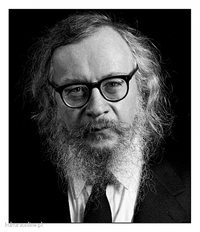

- Born: September 4, 1896, Marseille France
- Died: March 4, 1948, Ivry-sur Seine France
Theatre of Cruelty
Artaud wanted audiences to find in the theatre not an area for escape from the world, but the realisation of their worst nightmares and deepest fears. He therefore tried to provoke conditions that would force the release of instincts he believed were hidden beneath the civilised social masking all human behaviour. Artaud saw a new way in releasing theatrical energy through strong and often dark imagery.He welcomed the irrational impulses that could be stimulated by suffering and pain and argued that theatricality should be employed to increase a sense of danger, violence and vulnerability in the audience. However, Artaud argued that his concept of cruelty was not sadistic. He wanted to stimulate what was honest and true and the cruelty he envisaged required determination that was necessary if performers and audiences were to confront and experience the dark and terrifying responses that lay at the heart of each human being. Doing this would craft a tense atmosphere within the theatre and provoke genuine response and feeling from the audience. By including lights, sound and other performance elements Artuad wanted to represent reality and therefore affect the audience to his full potential. Artaud's work and ideas began to receive further attention after his death in 1948, his visions began to inspire and intrigue a new generation of theatre critics and practitioners. In the 1950s, the concept of Theatre of Cruelty was used to describe some of the dark views of human existence.
Life
Artauds mother gave birth to nine children but only Artaud and his sister survived. When he was 4 he had a severe case of meningitis, which gave him a nervous irritable temperament throughout his adolescence. He also had neuralgia, stammering and severe bouts of clinical depression. In March 1920, Artaud moved to Paris to pursue a career as a writer, and instead discovered he had a talent for avant-garde theatre.
GROTOWSKI
- The term associated with Jerzy Grotowski and the influential Laboratory Theatre. He called his theatre poor because it dispensed with theatrical technology resources of ‘rich’ theatre. Grotowski made the actor’s voice and body central to the performance. Only stationary light sources were used; the only masks were the actors’ faces; costume was nondescript; vocal effects replaced instrumental music and sound ‘off’; the auditorium became an intimate space divided in varying ways to allow the utmost contact and exchange between performers and audience. Grotowski saw something beyond drama. He worked to shape emotional and physical responses so that the impulse was active and current. He moved beyond the early influence of Stanislavsky towards a ritualized intensity. However, at moments of shock or terror, he argued, human beings use ‘rhythmically articulated signs’ and begin to dance and sing. When the theatre confronts us with brutal situations where ‘the life mask cracks and falls away’ it can expose an ‘intimate layer’ which returns us to human truths. The aims of poor theatre are reflective of the theories of Artaud. But Artaud showed the work of an actor with ‘rich’ technology of sound, light and costume.
- After watching this video I acknowledge the delicacy and appreciation Grotowski has for the primary use of the human body. Through "poor" theatre actors are left bare on stage and only to depend on their skills and accuracy. How different movements from the body can evoke a variety of meaning is priceless. His techniques within this video are pushing the actors to commit fully to the exercise and force them to hit each bone of their body, in order to reflect the emotion and create meaning. To "incarnate" means to change but not destroy and I can see this meaning holding effect over the movements as each spontaneous gesture isn't ignored or irrelevant.
BROOK
- Born: Peter Stephen Paul Brook21 March 1925
Chiswick, London
Peter brook was inspired by Artaud and his ideas of his Theatre of Cruelty. His major influence, however, was Joan Littlewood. Brook described her as "the most galvanising director in mid-20th century Britain".
A quote from the guardian: He said: "I wanted to look very realistically to the future. I can't say I'll stay here for ever. Everyone says something has been created almost invisibly in this theatre over 34 years. A lot of thought went into what would be the proper continuity. I didn't want to just place someone here and say, 'Here, take over.' I never talked about retirement as retirement is something forced on you by the state if you are unfortunate enough to work for the state. This has always been a private theatre." Brook defines the human connection through many different ways, one of which is directing. He claim's “the supreme jujitsu” style of directing “would be for the director to stimulate such an outpouring of the actor's inner richness that it completely transforms the subjective nature of his original impulse”(Brook, 61). What he is describing is non-directional directing. In order for the actor to confidently feel what their character is intended to feel, they must discover those emotions on their own, without the director telling him what they are. The director's job is then to attempt to call forth existing emotions within the actor. If this can be done successfully, then an authentic human connection will be made between the actor and audience. I believe Brook is signifying independence and courage within a actor pushing them to act on instinct and dive into a characters emotion. Brook would often use acrobatics and highly physical elements in his performances, shifting emphasis from oration to action. Simply, it was a matter of letting actions speak louder than words.
“We set an actor in front of us, asked him to imagine a dramatic situation that did not involve any physical movement, then we all tried to understand what state he was in. Of course, this was impossible, which was the point of the exercise” (Brook, 49)
This quote to me shows that physical representations are a key factor in order to show emotion. Actors must put their whole state of mind in the emotion and feeling they want to evoke and show it through physicality. It is with physicality that the feeling is demonstrated and the audience can relate with more. Truth and power comes with movement as it represents the person you are.
Tickle Me
Why do you think we did this task? How did it make you feel?
I felt as if I was impersonating someone else's emotion. They personally evoked a feeling that was pure and from the heart so to impersonate that was difficult and could be portrayed as unrealistic and forced. But as an actor your'e pushed into situations where you have to commit 100% and break boundaries with your limits. Laughter can be hard to imitate. This task experimented with capturing characterisation and believability.
Impossible Task.
My impossible task was to try and climb onto the ceiling with gloves on. This made me feel frustrated and tired yet it juxtaposed against my determination and devotion. I tried to achieve it by climbing onto chairs and cracks in the wall - attempting to get higher each time. I think this task was to highlight the limits and breaking points within an actor. We must push even harder than our initial thought in order to portray convincing emotion and dedication to the arts. Linking to Artauds "theatre of cruelty" this experience inspired his uncomfort and raw emotions the spectator will withold. The "cost of the actor" is pushed to it's extermes and tested to see if an actor will give up when given the impossible.
Music
Listening to the relaxed, slow music made me connect with other actors during the process. Whilst shifting from other songs then back to the slow music made it possible for the actor not to think about there movement. It reminded me of "given circumstance" as each music piece required different movement. Grotowski's, Artuad and Brook often use music to inspire the actors into devising a piece. This proves to be effective as music is the best prop for improvisation and it allows different interpretations to be understand without speech.
Why do you think we did this task? How did it make you feel?
I felt as if I was impersonating someone else's emotion. They personally evoked a feeling that was pure and from the heart so to impersonate that was difficult and could be portrayed as unrealistic and forced. But as an actor your'e pushed into situations where you have to commit 100% and break boundaries with your limits. Laughter can be hard to imitate. This task experimented with capturing characterisation and believability.
Impossible Task.
My impossible task was to try and climb onto the ceiling with gloves on. This made me feel frustrated and tired yet it juxtaposed against my determination and devotion. I tried to achieve it by climbing onto chairs and cracks in the wall - attempting to get higher each time. I think this task was to highlight the limits and breaking points within an actor. We must push even harder than our initial thought in order to portray convincing emotion and dedication to the arts. Linking to Artauds "theatre of cruelty" this experience inspired his uncomfort and raw emotions the spectator will withold. The "cost of the actor" is pushed to it's extermes and tested to see if an actor will give up when given the impossible.
Music
Listening to the relaxed, slow music made me connect with other actors during the process. Whilst shifting from other songs then back to the slow music made it possible for the actor not to think about there movement. It reminded me of "given circumstance" as each music piece required different movement. Grotowski's, Artuad and Brook often use music to inspire the actors into devising a piece. This proves to be effective as music is the best prop for improvisation and it allows different interpretations to be understand without speech.
Subscribe to:
Posts (Atom)