
- Born: September 4, 1896, Marseille France
- Died: March 4, 1948, Ivry-sur Seine France
Theatre of Cruelty
Artaud wanted audiences to find in the theatre not an area for escape from the world, but the realisation of their worst nightmares and deepest fears. He therefore tried to provoke conditions that would force the release of instincts he believed were hidden beneath the civilised social masking all human behaviour. Artaud saw a new way in releasing theatrical energy through strong and often dark imagery.He welcomed the irrational impulses that could be stimulated by suffering and pain and argued that theatricality should be employed to increase a sense of danger, violence and vulnerability in the audience. However, Artaud argued that his concept of cruelty was not sadistic. He wanted to stimulate what was honest and true and the cruelty he envisaged required determination that was necessary if performers and audiences were to confront and experience the dark and terrifying responses that lay at the heart of each human being. Doing this would craft a tense atmosphere within the theatre and provoke genuine response and feeling from the audience. By including lights, sound and other performance elements Artuad wanted to represent reality and therefore affect the audience to his full potential. Artaud's work and ideas began to receive further attention after his death in 1948, his visions began to inspire and intrigue a new generation of theatre critics and practitioners. In the 1950s, the concept of Theatre of Cruelty was used to describe some of the dark views of human existence.
Life
Artauds mother gave birth to nine children but only Artaud and his sister survived. When he was 4 he had a severe case of meningitis, which gave him a nervous irritable temperament throughout his adolescence. He also had neuralgia, stammering and severe bouts of clinical depression. In March 1920, Artaud moved to Paris to pursue a career as a writer, and instead discovered he had a talent for avant-garde theatre.
GROTOWSKI
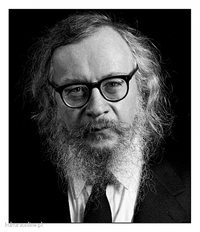
- The term associated with Jerzy Grotowski and the influential Laboratory Theatre. He called his theatre poor because it dispensed with theatrical technology resources of ‘rich’ theatre. Grotowski made the actor’s voice and body central to the performance. Only stationary light sources were used; the only masks were the actors’ faces; costume was nondescript; vocal effects replaced instrumental music and sound ‘off’; the auditorium became an intimate space divided in varying ways to allow the utmost contact and exchange between performers and audience. Grotowski saw something beyond drama. He worked to shape emotional and physical responses so that the impulse was active and current. He moved beyond the early influence of Stanislavsky towards a ritualized intensity. However, at moments of shock or terror, he argued, human beings use ‘rhythmically articulated signs’ and begin to dance and sing. When the theatre confronts us with brutal situations where ‘the life mask cracks and falls away’ it can expose an ‘intimate layer’ which returns us to human truths. The aims of poor theatre are reflective of the theories of Artaud. But Artaud showed the work of an actor with ‘rich’ technology of sound, light and costume.
- After watching this video I acknowledge the delicacy and appreciation Grotowski has for the primary use of the human body. Through "poor" theatre actors are left bare on stage and only to depend on their skills and accuracy. How different movements from the body can evoke a variety of meaning is priceless. His techniques within this video are pushing the actors to commit fully to the exercise and force them to hit each bone of their body, in order to reflect the emotion and create meaning. To "incarnate" means to change but not destroy and I can see this meaning holding effect over the movements as each spontaneous gesture isn't ignored or irrelevant.
BROOK

- Born: Peter Stephen Paul Brook21 March 1925
Chiswick, London
Peter brook was inspired by Artaud and his ideas of his Theatre of Cruelty. His major influence, however, was Joan Littlewood. Brook described her as "the most galvanising director in mid-20th century Britain".
A quote from the guardian: He said: "I wanted to look very realistically to the future. I can't say I'll stay here for ever. Everyone says something has been created almost invisibly in this theatre over 34 years. A lot of thought went into what would be the proper continuity. I didn't want to just place someone here and say, 'Here, take over.' I never talked about retirement as retirement is something forced on you by the state if you are unfortunate enough to work for the state. This has always been a private theatre." Brook defines the human connection through many different ways, one of which is directing. He claim's “the supreme jujitsu” style of directing “would be for the director to stimulate such an outpouring of the actor's inner richness that it completely transforms the subjective nature of his original impulse”(Brook, 61). What he is describing is non-directional directing. In order for the actor to confidently feel what their character is intended to feel, they must discover those emotions on their own, without the director telling him what they are. The director's job is then to attempt to call forth existing emotions within the actor. If this can be done successfully, then an authentic human connection will be made between the actor and audience. I believe Brook is signifying independence and courage within a actor pushing them to act on instinct and dive into a characters emotion. Brook would often use acrobatics and highly physical elements in his performances, shifting emphasis from oration to action. Simply, it was a matter of letting actions speak louder than words.
“We set an actor in front of us, asked him to imagine a dramatic situation that did not involve any physical movement, then we all tried to understand what state he was in. Of course, this was impossible, which was the point of the exercise” (Brook, 49)
This quote to me shows that physical representations are a key factor in order to show emotion. Actors must put their whole state of mind in the emotion and feeling they want to evoke and show it through physicality. It is with physicality that the feeling is demonstrated and the audience can relate with more. Truth and power comes with movement as it represents the person you are.

No comments:
Post a Comment